Palette styles new do not delete
Guardian weekly thrasher


Guardian weekly
-
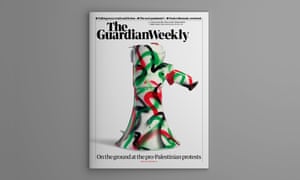 In the US and the UK, what is the real picture on the mass marches and campus rallies? Plus: the fall of Hunza Yousaf
 -
 Subscribe to a clearer, global perspective on the issues shaping our world
 -
 Subscribe to The Guardian Weekly and enjoy seven days of international news in one magazine with worldwide delivery.
Guardian Weekly at 100
-
 Our seven-day print edition was first published on this day in 1919
 -
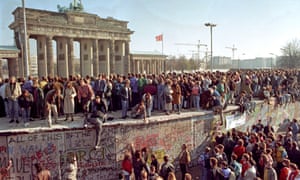 Our weekly print magazine is celebrating a century of news. Here’s how it covered the Apollo 11 landings; Northern Ireland’s Bloody Sunday; Hillsborough; the fall of the Berlin Wall and Rwanda’s genocide
 -
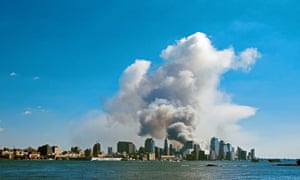 Our weekly print news magazine is celebrating its centenary. Here’s how it covered big events of the past two decades including 9/11, the Arab Spring and Trump’s victory
Readers around the world
History of Guardian weekly
-
 The Guardian Weekly editor Will Dean on the transformation of our century-old international weekly newspaper into a weekly news magazine
 -
 For almost a century, the Guardian Weekly has carried the Guardian’s liberal news voice to a global readership. Taken from the GNM archives, these pictures chart the paper’s life and times from 1919 to the present day
 -
 Since the end of the first world war, the Weekly has delivered the liberal Guardian perspective to a global readership

In pictures
-
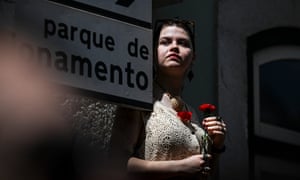 Thousands in Lisbon celebrated the 50th anniversary on Thursday of Portugal’s Carnation Revolution, which toppled the longest fascist dictatorship in Europe and ushered in democracy. The almost bloodless revolution was conducted by a group of junior army officers who wanted democracy and to put an end to long-running wars against independence movements in African colonies
 -
 The Guardian’s picture editors select photographs from around the world
-
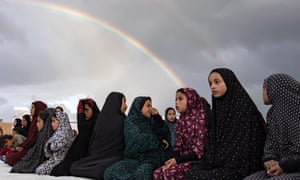 Muslims mark the start of the three-day festival that signals the end of the holy month of Ramadan
 -
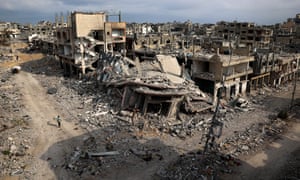 After withdrawal of Israeli forces from parts of southern Gaza, displaced Palestinians are starting to return to devastated city of Khan Younis
 -
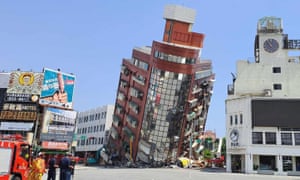 Taiwan’s strongest earthquake in 25 years has killed at least nine and injured hundreds, causing building collapses, power outages and landslides on the island
 -
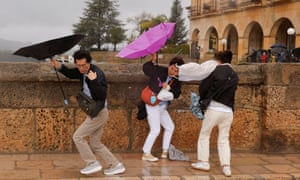 Torrential rain forced the cancellation of Good Friday processions through Seville and other holy week parades, from Cádiz in the south-west to Zaragoza in the north
Regulars
-
This reader found the Weekly to be an ideal travelling companion
-
 The long-running series in which readers answer other readers’ questions on subjects ranging from trivial flights of fancy to profound scientific and philosophical concepts
 -
Dominic Cummings: maverick or mishmash; Irish election fallout
Puzzles
-
 Leonard Barden on ChessChess: Gukesh, 17, shocks favourites to become youngest challenger for titleThe Chennai teenager won the Candidates by just half a point and will take on China’s Ding Liren for the world crown in a 14-game series later this year
 -
 Cryptic crossword No 29,373
 -

-
 Whether it’s working out or being creative, we’d like to know how active you are with your commute
 -
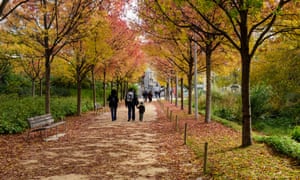
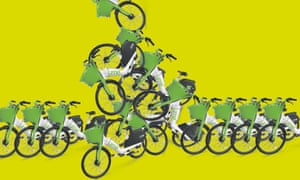
-
 In the past year, in virtually every region, journalists and independent media outlets faced increasing repression
 -
 The population of El Fasher, which includes thousands of displaced people, is in ‘dire need of food, medicine and water’
 -
Culture
-
4 out of 5 stars.
 Although it is often hilarious, Clarkson’s ever-compelling show is back with shocking and harrowing insights into the truth about British farming. Tissues at the ready!
 -
3 out of 5 stars.

Unfrosted review – Jerry Seinfeld delivers a surreal toast to Pop-Tarts
3 out of 5 stars.The history of how the all-American breakfast snack was created is served up with lashings of goofiness in this comedy caper -
-
3 out of 5 stars.

-
2 out of 5 stars.

-

Long reads
-
 Advances in fields such as spectrometry and gene sequencing are unleashing torrents of new data about the ancient world – and could offer answers to questions we never even knew to ask. By Jacob Mikanowski
 -
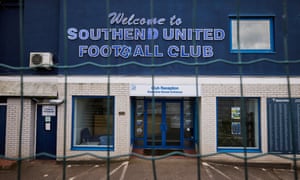 The long read: In 20 years, this Essex club has tumbled down the leagues and seen its ground fall apart. Is a revival finally coming – or will hopes be dashed again?
 -
 This week, from 2020: It was once a widely accepted way of explaining why some children struggled to read and write. But in recent years, some experts have begun to question the existence of dyslexia itself. By Sirin Kale
Most viewed
Guardian Weekly's global community
Guardian Weekly's global community